Choosing a countertop is one of the most significant decisions in a kitchen or bathroom remodel. It isn’t just about the “wow” factor when you walk into the room; it’s about how that surface handles a spilled glass of red wine, a scorching hot pan, or the accidental drop of a heavy cast-iron skillet.
For years, natural stone was the undisputed king, but modern technology has introduced two formidable contenders: Porcelain and Quartz. While they may look similar at a glance, they are fundamentally different materials with distinct strengths. Whether you are designing a sleek outdoor kitchen or a high-traffic family hub, understanding these differences is the key to a successful long-term investment.
Porcelain vs Quartz Countertops: Quick Comparison Table
| Feature | Porcelain Countertops | Quartz Countertops |
| Material Type | Ceramic (fired clay) | Engineered stone (90% quartz + resin) |
| Heat Resistance | Excellent (Heat-proof) | Moderate (Heat-sensitive) |
| Scratch Resistance | Excellent | Very good |
| UV Resistance | Excellent (Outdoor safe) | Poor (Fades in sunlight) |
| Impact Resistance | Fair (Prone to edge chipping) | Excellent |
| Maintenance | Extremely Low | Low |
| Thickness | Typically thin (6mm–12mm) | Typically thick (2cm–3cm) |
| Price | Mid to High | Mid to High |
What Are Porcelain Countertops?
Material and Manufacturing
Porcelain countertops are a type of high-density ceramic. They are made from refined kaolin clay and minerals like feldspar, which are fired at temperatures exceeding 1200°C. This process, known as vitrification, creates a surface that is incredibly dense and virtually non-porous.
Key Benefits of Porcelain
- Heat Resistance: You can take a pot directly from the stove and set it on porcelain without a trivet. It won’t melt, burn, or crack from thermal shock.
- Outdoor Versatility: Unlike almost any other high-end surface, porcelain is UV-resistant. It won’t fade or discolor under the sun, making it the premier choice for outdoor BBQs.
- Stain and Scratch Proof: Its density makes it nearly impossible to scratch with a knife or stain with oils.
Drawbacks to Consider
The primary challenge with porcelain is its brittleness. Because the slabs are typically thinner than quartz, the edges can chip if hit with a heavy object. Additionally, because the design is usually printed on the surface rather than through the entire slab, a chip may reveal a different color underneath.
What Are Quartz Countertops?
Material and Composition
Quartz is an engineered stone. It is composed of roughly 90% to 93% crushed natural quartz crystals bound together by 7% to 10% polyester resins and pigments. This “recipe” creates a surface that is uniform, incredibly strong, and flexible.
Key Benefits of Quartz
- Impact Resistance: The resin “glue” gives quartz a slight flexibility that porcelain lacks. It is much harder to chip or crack quartz during daily use.
- Design Consistency: If you are doing a large kitchen with multiple slabs, quartz offers nearly perfect color matching across pieces.
- Feel: Quartz feels more like natural stone—substantial, heavy, and solid.
Drawbacks to Consider
The biggest weakness of quartz is heat. The resins used to bind the stone can melt or discolor at temperatures around 150°C. If you set a hot pan down, you risk a permanent “burn ring.” It is also susceptible to UV damage, meaning it will turn yellow if installed near a window with high sun exposure.
The Durability Showdown
Heat Resistance: Porcelain Wins
In a real-life kitchen scenario, porcelain is the clear victor here. If you are a high-heat cook who likes to move fast, porcelain offers peace of mind. With quartz, you must remain disciplined about using trivets and pads.
Impact and Chipping: Quartz Wins
Think about heavy grocery bags, leaning against the counter, or kids dropping toys. Quartz is “tougher” in terms of impact. Porcelain is “harder,” which actually makes it more prone to shattering or chipping on the edges if struck at the wrong angle.
Scratch and Stain Resistance: A Tie
Both materials are non-porous. Neither requires sealing, and both will easily shrug off coffee, wine, and citrus juice. For daily wear and tear, you can’t go wrong with either.
Maintenance and Care
One of the best features of both materials is the lack of maintenance. Unlike marble or granite, you never have to spend a Saturday morning resealing your counters.
- Daily Cleaning: A simple wipe-down with warm water and a mild dish soap is all you need.
- Chemical Sensitivity: Avoid highly abrasive scrubbers or bleach. While porcelain is more resistant to chemicals, quartz can be dulled by harsh solvents that break down the resin.
- Hygiene: Because both are non-porous, they do not harbor bacteria or mold, making them some of the most hygienic surfaces available for food preparation.
Design and Aesthetic Appeal
The Modern “Thin” Look
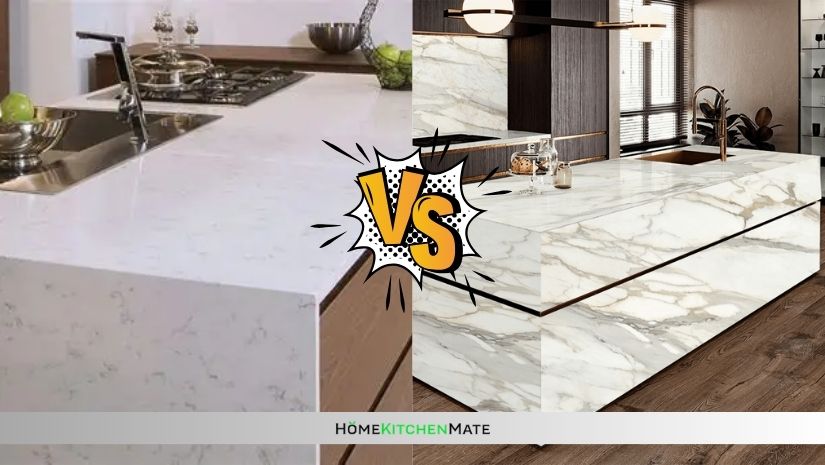
Porcelain is leading the trend for ultra-thin, minimalist designs. Slabs can be as thin as 6mm, allowing for sleek, European-style aesthetics or even using the same material for the countertop, backsplash, and flooring for a seamless look.
The Traditional “Stone” Feel
Quartz typically comes in 2cm or 3cm thicknesses. It provides that classic, heavy “slab” look that many homeowners associate with luxury. If you want the appearance of thick Calacatta marble with deep veining, quartz is often the more convincing option because the patterns are often “through-body.”
Cost and Value for Money
Price-wise, they occupy a similar bracket, typically ranging from $60 to $120 per square foot installed.
However, installation costs for porcelain can be higher. Because it is thin and brittle during the cutting phase, it requires a highly specialized fabricator. If a contractor treats porcelain like granite, it will likely crack during installation. Always ensure your installer has specific experience with large-format porcelain slabs.
Which One Should You Choose?
Choose Porcelain If:
- You want an outdoor kitchen.
- You frequently cook with high heat and don’t want to use trivets.
- You love the ultra-modern, thin-profile aesthetic.
- You want a seamless look where the backsplash matches the counter perfectly.
Choose Quartz If:
- You have a busy, high-impact household (kids, heavy equipment).
- You prefer a traditional, thick stone appearance.
- Your kitchen layout has complex edges or unique shapes (easier to fabricate).
- Consistency in pattern across multiple slabs is a priority.
Related Article – Bamboo vs Acacia Cutting Board: Pros, Cons, and Key Differences
FAQs
Is porcelain more expensive than quartz?
The material cost is similar, but porcelain often has higher labor costs due to the specialized tools and expertise required to cut the thin, dense slabs without cracking them.
Can I cut directly on porcelain?
Technically, yes—it is harder than a steel knife. However, it will dull your knives very quickly. It’s always better to use a cutting board.
Does quartz fade in the sun?
Yes. The resins in quartz are not UV-stable. Over time, direct sunlight will cause the colors to fade or the white sections to turn yellow.
How large is the space you’re planning for, and will it have significant exposure to direct sunlight?

Rachel Bennett is a passionate home cook, kitchen enthusiast, and the voice behind Home Kitchen Mate. With years of hands-on experience experimenting in the kitchen, she blends creativity and practicality to make cooking easier and more enjoyable for everyone.